
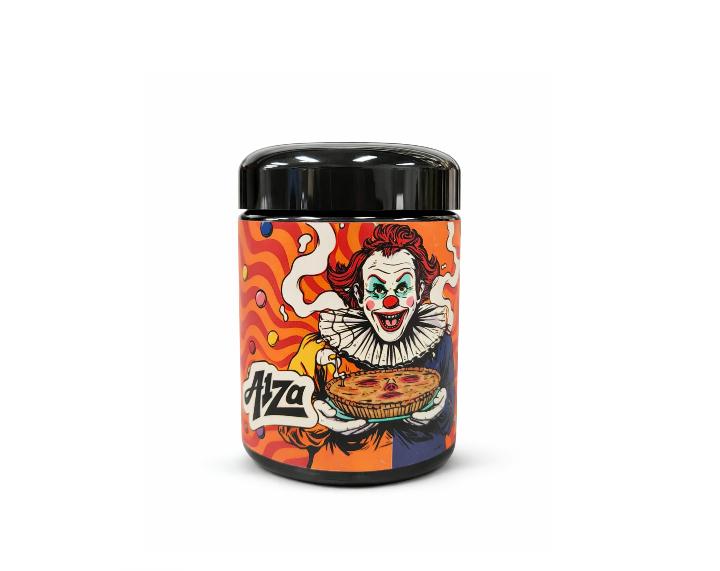
Pie Face 14g PP by A1ZA: Flower Weights, Gummy Claims, and State Rules
Pie Face 14g PP by A1ZA combines a product name, a stated quantity, an abbreviation, and a named brand. Understanding that description requires separating those details from verified information about the material’s composition and legal classification.
The supporting keywords raise additional questions about Connecticut dispensaries, Tennessee restrictions, and high-potency gummies. These subjects require separate explanations. A flower name does not establish an edible’s ingredients, and a local-search phrase does not prove that a business is authorized.
This educational guide explains the 14-gram quantity, discusses gummy-potency claims, and distinguishes Connecticut’s adult-use framework from Tennessee’s marijuana and hemp rules.
What Does Pie Face 14g PP by A1ZA Establish?
Pie Face 14g PP by A1ZA is the supplied product name. Its components communicate different information:
| Name element | What it communicates |
|---|---|
| Pie Face | Product or cultivar name |
| 14g | A stated quantity of 14 grams |
| PP | An abbreviation requiring confirmation from the label |
| A1ZA | The named brand |
“PP” may be used for prepackaged products, but its meaning should be confirmed on the actual package. The supplied name alone does not verify the product format, manufacturer identity, or batch characteristics.
Readers should not assume an exact THC percentage, genetic background, flavor profile, or medical benefit without supporting documentation.
For further educational exploration, review cannabis terminology on Bulkweedusa.com. Compare descriptive claims with evidence associated with the actual material.
Product Identity and Batch Information Are Different
A product name identifies a description. A batch identifier connects testing information to particular material.
If a Pie Face 14g PP by A1ZA page lists a numerical cannabinoid result, readers should check whether the report corresponds to that batch. Information about another package should not automatically be applied to the current one.
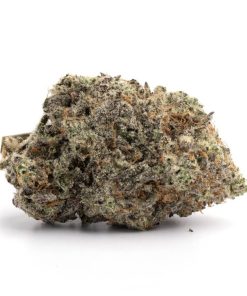
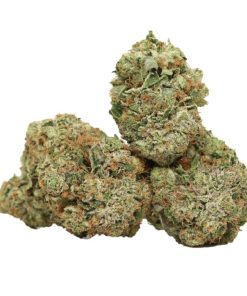
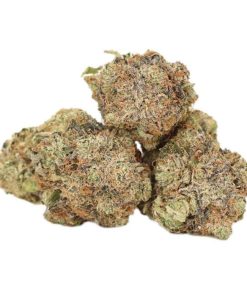
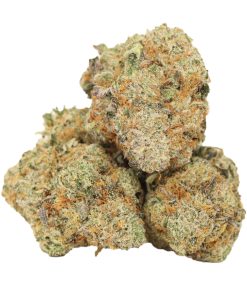
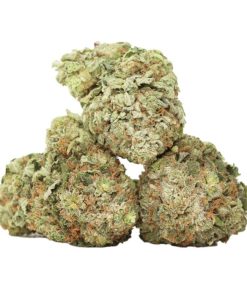
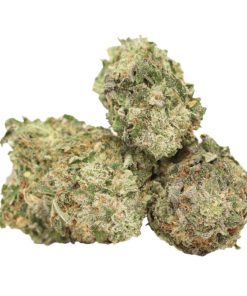
A photograph can illustrate appearance, but it cannot verify composition or contaminant testing.
Understanding the 14-Gram Quantity
Fourteen grams describes mass. In informal cannabis terminology, it is commonly associated with a rounded half-ounce quantity.
A standard half ounce is approximately 14.17 grams, so a package explicitly described as 14 grams is not mathematically identical to half a standard ounce. NIST provides the underlying conversion factors. www.nist.gov
The quantity also does not mean 14 grams of THC. Flower weight concerns total plant material, while cannabinoid content is a separate measurement.
For Pie Face 14g PP by A1ZA, the explicit weight claim should remain distinct from any composition or potency statement.
Dispensary Stamford CT: Understanding Connecticut’s Framework
Dispensary Stamford CT is a location-based search phrase. It does not independently establish a business’s current authorization, product availability, or services.
Connecticut maintains an adult-use cannabis framework for adults aged 21 and older, alongside its medical marijuana framework. Official state resources explain the applicable laws and consumer information. portal.ct.gov
Consult Connecticut’s official cannabis information for current guidance.
A Stamford reference does not verify a particular product’s composition. Likewise, information about Connecticut should not be applied to Tennessee, which has a different regulatory framework.
Strongest Weed Gummies: Why the Claim Needs a Definition
Strongest weed gummies is a comparative search phrase, not a standardized laboratory category.
“Strongest” could refer to THC per piece, per serving, or per package. Without identifying the measurement basis, the comparison is incomplete.
A hypothetical package containing multiple pieces can have a high total THC amount while each piece contains a smaller amount. Conversely, a single piece may carry a different labeled concentration.
Neither packaging size nor a familiar name establishes those figures. Readers need clear labeling and supporting information.
A Pie Face 14g PP by A1ZA description should not present flower weight as an equivalent measure of gummy potency.
Strongest THC Gummy: Potency Is Not a Safety Rating
The phrase strongest THC gummy does not identify a universally suitable product. A higher labeled THC amount is not evidence of greater safety or medical benefit.
The CDC explains that edible effects may take 30 minutes to two hours to appear and can last longer than expected. Delayed effects can contribute to consuming too much and increase poisoning risk. CDC
Read the CDC’s cannabis and poisoning guidance for public-health information.
Per Piece, Per Serving, and Per Package
These label statements answer different questions:
| Statement | What it describes |
|---|---|
| THC per piece | Labeled amount associated with one piece |
| THC per serving | Labeled amount associated with a defined serving |
| THC per package | Labeled amount across the entire package |
| Net weight | Total product mass excluding packaging |
A potency comparison should use the same measurement basis. It should also avoid presenting a package quantity as a consumption recommendation.
Educational Resources: Different Claims Need Different Evidence
An informative article distinguishes four subjects:
- Product identity: What the name and format describe.
- Composition: What matching laboratory documentation establishes.
- Health: What appropriate clinical and public-health evidence supports.
- Legal status: What current rules permit in the relevant jurisdiction.
A report about composition cannot independently establish delivery authorization. A state law cannot establish how an individual will respond to an edible.
Explore terminology on Bulkweedusa.com, while using official resources for regulatory and health questions.
Tennessee Recreational Dispensaries: Marijuana and Hemp Are Different
The phrase Tennessee recreational dispensaries can create confusion because hemp-related businesses and recreational marijuana dispensaries are not interchangeable categories.
Tennessee’s Bureau of Investigation continues to describe marijuana as illegal in the state. Separately, Tennessee regulates qualifying hemp-derived cannabinoid products through a different framework. tn.gov
The existence of a hemp business does not establish a statewide recreational marijuana program. Likewise, a commercial page using “dispensary” does not independently prove authorization for every advertised product.
For Pie Face 14g PP by A1ZA, the name and weight do not determine whether the material satisfies Tennessee’s requirements.
Dispensary in Tennessee: Why Total THC Matters
Dispensary in Tennessee is a business-description phrase rather than proof of a product’s legal classification.
Tennessee’s Alcoholic Beverage Commission guidance states that products above 0.3% total THC are illegal under its hemp-product framework. Products at or below that concentration must still satisfy other requirements. Tennessee Alcoholic Beverage Commission
The state defines total THC as:
Total THC = (THCA × 0.877) + delta-9 THC
Consequently, a low delta-9 result alone does not establish compliance. tn.gov
Read the Tennessee Alcoholic Beverage Commission’s official FAQs for the current explanation.
Dispensary Sevierville TN: A City Name Does Not Change State Rules
Dispensary Sevierville TN identifies a local-search interest. It does not establish that recreational marijuana is authorized or that a listed product meets Tennessee’s hemp requirements.
A city reference, professional website, or positive review cannot replace product-specific evidence and applicable regulatory guidance.
When researching Pie Face 14g PP by A1ZA, distinguish the location of a listing from the composition of the material. Those facts require separate verification.
Closest Legal Dispensary to Tennessee: Distance Is Not Authorization
Closest legal dispensary to Tennessee combines a geographic comparison with a legal claim.
A business’s status in another jurisdiction does not establish permission to bring its products into Tennessee. The rules governing a business location and the rules governing transport or possession are separate.
An educational article should explain that distinction rather than implying that proximity creates an exception.
Likewise, a product name cannot determine whether movement between jurisdictions is permitted.
Weed Online Delivery TN: Online Availability Has Limits
Weed online delivery TN expresses a service-related interest. An online listing does not independently establish delivery authorization or product compliance.
Statements such as “available online” and “legal in Tennessee” require different supporting evidence. A website’s ability to accept inquiries does not establish that every advertised activity is permitted.
For educational research, identify the product category, the claim being made, and the official requirements relevant to it.
Frequently Asked Questions
1. What is Pie Face 14g PP by A1ZA?
It is the supplied product name combining Pie Face, a stated 14-gram quantity, the abbreviation PP, and A1ZA. Specific characteristics require supporting documentation.
2. Is 14 grams exactly half an ounce?
No. Fourteen grams is a common rounded quantity. A standard half ounce is approximately 14.17 grams.
3. Does “strongest THC gummy” establish safety?
No. A potency claim is not a safety rating. Edibles also have delayed effects and poisoning risks. CDC
4. Are Tennessee hemp businesses equivalent to recreational marijuana dispensaries?
No. Tennessee distinguishes qualifying hemp products from marijuana, which its official guidance continues to describe as illegal. tn.gov
5. Does an online delivery claim prove Tennessee compliance?
No. Website availability does not independently establish product classification or authorization for delivery.
Where to Explore Further
Continue researching cannabis terminology through Bulkweedusa.com, while using Connecticut and Tennessee authorities for state-specific questions. For Pie Face 14g PP by A1ZA, distinguish the stated quantity, batch evidence, edible comparisons, and applicable rules.
Be the first to review “Pie Face 14g PP by A1ZA”
Related products

Indica
Indica
Indica
Indica
Indica
Indica
Indica
Indica
Reviews
There are no reviews yet.