
Cannabis Education
CBD Oil for Back Pain
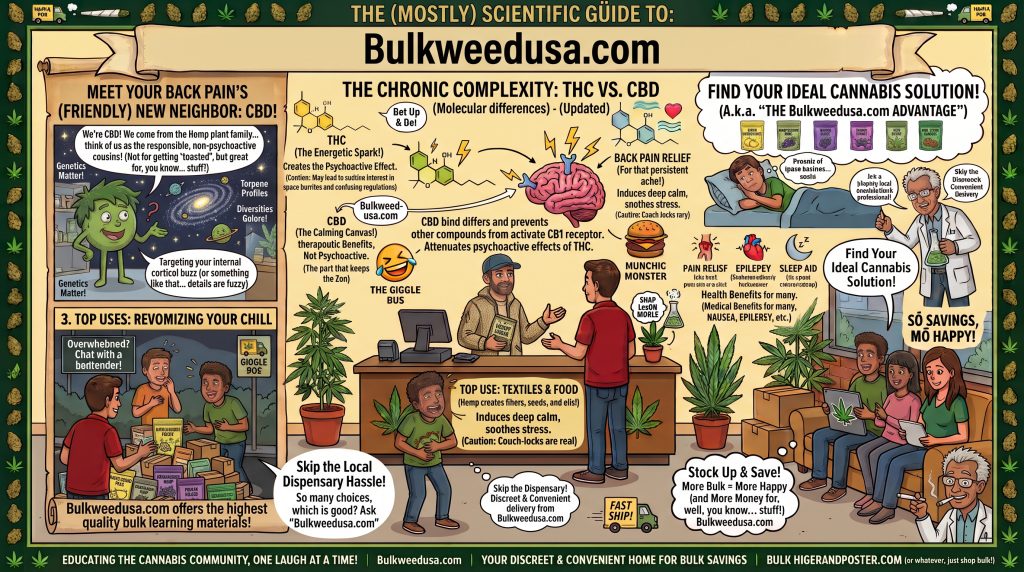
Sep
CBD Oil for Back Pain: How to Use CBD, Hemp Oil and THC for Pain Relief
CBD oil for back pain has become a widely discussed option among Americans looking for alternatives or additions to conventional approaches for chronic discomfort. Cannabidiol, better known as CBD, is one of the major cannabinoids found in cannabis and hemp. Unlike THC, CBD by itself does not produce the characteristic cannabis “high.”
Interest in CBD has grown alongside questions such as how to use CBD oil for pain, hemp oil for pain relief, how to use hemp oil for pain, THC oil for pain relief, and hash oil for pain relief.
However, popularity should not be confused with proven effectiveness.
Current research does not establish over-the-counter CBD oil as a proven treatment for back pain. Recent evidence reviews have found mixed results for cannabinoids and chronic pain, with particularly limited evidence supporting CBD alone.
Understanding what researchers actually know can help consumers separate promising theories from established medical treatment.
Why Back Pain Is Complicated
Back pain is not a single disease.
Pain can originate from different structures and conditions, including:
- Muscles
- Ligaments
- Joints
- Intervertebral discs
- Nerves
- Vertebrae
- Inflammation
- Injury
Some pain is acute and resolves relatively quickly.
Other pain becomes chronic and lasts for months or years.
This matters because a treatment that helps one type of pain may have little effect on another.
For example, nerve-related pain can behave differently from muscular pain.
That makes sweeping claims that one cannabis product “treats back pain” scientifically unreliable.
What Is CBD?
CBD stands for cannabidiol.
It is one of more than 100 cannabinoids associated with cannabis.
CBD and THC are chemically related but have significantly different psychoactive effects.
THC is intoxicating.
CBD by itself is considered non-intoxicating.
This difference is central to understanding CBD oil for back pain, because research involving THC-containing cannabis products cannot automatically be used as evidence that CBD-only oil works the same way.
What Does Current Research Say?
Scientific evidence concerning CBD and pain remains unsettled.
A 2023 systematic review examined 15 studies investigating CBD for chronic pain. Several studies reported improvements, but researchers emphasized major differences among study designs and concluded that stronger research was necessary.
A later systematic review also described promising analgesic and anti-inflammatory findings but emphasized that clinical evidence remained limited.
More importantly, the 2025 AHRQ living systematic review provides a useful update.
It found that purified oral CBD alone was not associated with reduced pain intensity or improved function compared with placebo in the randomized trials reviewed.
Some cannabinoid products containing proportionally more THC produced small improvements in chronic pain, but they also increased adverse effects such as dizziness, nausea and sedation.
The evidence therefore does not support treating all cannabis-derived products as interchangeable.
CBD and Inflammation
CBD is frequently marketed as an anti-inflammatory product.
Laboratory and animal research provides biological reasons to investigate CBD’s relationship with inflammatory pathways.
Human clinical evidence is less conclusive.
This distinction is important.
A substance demonstrating an anti-inflammatory mechanism in cells or animals does not automatically mean an ordinary retail oil has been clinically proven to relieve human back pain.
Research needs to establish:
- Effective formulation
- Dose
- Duration
- Patient population
- Safety
- Clinical significance
Those questions remain incompletely answered.
Nerve-Related Pain
Neuropathic pain results from nerve damage or dysfunction.
Examples can include burning, tingling, electric-shock sensations or hypersensitivity.
Cannabinoid research has shown some evidence of benefit for certain forms of neuropathic pain, but this research often involves THC-containing formulations rather than CBD alone.
The CDC states that a few studies have found cannabis helpful for neuropathic pain while emphasizing that evidence for cannabis in most acute and chronic pain remains limited.
That distinction matters when evaluating advertisements for cannabinoid oils.
How to Use CBD Oil for Pain
People searching how to use CBD oil for pain often expect a universal dose or treatment schedule.
Research does not currently support one standard OTC CBD dosage for back pain.
CBD products also differ substantially.
Variables include:
- CBD concentration
- Serving size
- Formulation
- Route of administration
- Other cannabinoids
- THC content
- Individual metabolism
- Other medications
FDA has not approved ordinary retail CBD oils as treatments for back pain.
Therefore, presenting a particular number of milligrams as the medically established back-pain dose would be misleading.
Someone considering CBD for persistent pain should discuss it with a healthcare professional, particularly when taking prescription medications.
Oral CBD Products
CBD oils are frequently used orally or sublingually according to manufacturer labeling.
The actual amount of CBD can vary substantially among products.
An oil might provide its concentration as:
- Milligrams per bottle
- Milligrams per milliliter
- Milligrams per serving
Those measurements are not interchangeable.
Consumers should read product labels carefully rather than assuming that one dropper from every brand delivers the same amount.
Topical Products
CBD also appears in:
- Creams
- Balms
- Lotions
- Gels
- Roll-ons
Topical products are marketed for localized discomfort.
However, marketing claims can extend beyond the available clinical evidence.
A product being applied directly over the painful area does not automatically demonstrate that enough CBD reaches the relevant tissues to produce a clinically meaningful effect.
More research is necessary.
Hemp Oil for Pain Relief
The phrase hemp oil for pain relief creates another common source of confusion.
“Hemp oil” can describe very different products.
Hemp Seed Oil
Hemp seed oil comes primarily from hemp seeds.
It contains little naturally occurring CBD or THC.
It should not automatically be treated as a CBD product.
CBD-Rich Hemp Extract
Cannabinoid-rich extracts generally come from parts of the plant containing greater concentrations of cannabinoids.
These products may contain CBD and, depending on formulation, other cannabinoids.
Therefore, someone researching CBD oil for back pain should check whether a product actually contains CBD rather than assuming every bottle labeled “hemp oil” does.
How to Use Hemp Oil for Pain
The answer depends on what “hemp oil” means.
If the product is ordinary hemp seed oil, it is fundamentally different from a CBD extract.
If it contains CBD, consumers should examine:
- CBD concentration
- THC concentration
- Ingredient list
- Certificate of analysis
- Manufacturer information
- Product warnings
There is no scientifically established universal hemp-oil regimen for treating back pain.
Full-Spectrum Products
Full-spectrum hemp extracts can contain multiple naturally occurring cannabis compounds.
Depending on the product and applicable law, these can include:
- CBD
- Small amounts of THC
- CBG
- CBC
- Terpenes
Some consumers prefer these products because of theories about cannabinoids working together.
However, claims about an “entourage effect” should not be treated as proof that a particular product will relieve back pain.
THC exposure can also matter for drug testing and impairment.
For broader educational information about cannabinoids, readers can explore Bulkweedusa.com.
Broad-Spectrum Products
Broad-spectrum products generally contain CBD plus other cannabis compounds while attempting to remove THC.
Exact formulations vary.
A “THC-free” marketing statement should ideally be supported by reliable laboratory testing.
People subject to workplace or other drug testing should recognize that labeling errors or trace contamination can still create uncertainty.
CBD Is Not THC
CBD and THC should not be treated as interchangeable.
CBD does not produce the characteristic THC high by itself.
THC can alter:
- Perception
- Memory
- Coordination
- Reaction time
- Judgment
This distinction becomes particularly important when discussing pain because some clinical cannabinoid research uses products containing THC.
Results from those trials cannot simply be attributed to CBD.
Educational Resources
For federal information about cannabis and chronic pain, including the limits of current evidence, visit the CDC Cannabis and Chronic Pain resource.
For federal information about CBD safety, drug interactions, liver risks and unproven medical claims, review the U.S. Food and Drug Administration CBD consumer information.
For scientific research on cannabidiol and chronic pain, review the PubMed systematic review on CBD and chronic pain.
THC Oil for Pain Relief
THC oil for pain relief is different from CBD oil.
THC is intoxicating.
Some cannabinoid research has found small improvements in certain chronic-pain outcomes from THC-containing products.
The 2025 AHRQ evidence review, for example, found small improvements in pain severity with certain higher-THC cannabinoid products.
But potential benefits came with increased adverse effects.
Reported problems included:
- Dizziness
- Nausea
- Sedation
THC can also impair driving and other activities requiring attention and coordination.
The risk-benefit calculation therefore differs substantially from CBD.
Hash Oil for Pain Relief
Hash oil for pain relief is another phrase that requires clarification.
Hash oil generally refers to concentrated cannabis extract and can contain substantial THC.
It should not be confused with CBD oil.
Depending on the product, concentrates can deliver much higher cannabinoid concentrations than cannabis flower.
Potential THC effects can include:
- Intoxication
- Altered perception
- Impaired memory
- Reduced coordination
- Anxiety
- Increased heart rate
- Slower reaction time
A high THC percentage does not mean a product has greater scientifically established pain-relieving value.
Is THC Better Than CBD for Pain?
The evidence cannot be reduced to a simple “THC works, CBD doesn’t” rule.
Different cannabinoid formulations have been studied for different conditions.
Recent systematic evidence suggests that some THC-containing formulations can produce small improvements in certain chronic-pain outcomes.
At the same time, adverse effects increase.
CBD-only evidence is less convincing.
For purified oral CBD alone, the 2025 AHRQ review found no significant improvement in pain intensity compared with placebo.
More high-quality research is needed to identify which patients, conditions, formulations and doses—if any—produce clinically meaningful benefits.
CBD Safety Matters
CBD is frequently described as natural, but natural does not mean risk-free.
FDA identifies several potential concerns.
These include:
- Liver injury
- Drug interactions
- Drowsiness
- Sedation
- Changes in alertness
CBD can alter how the body processes certain medications.
That makes professional medical guidance particularly important for people taking prescription drugs.
Newer Liver-Safety Evidence
CBD safety research continues to develop.
In an FDA-reported randomized trial involving healthy adults, 5.6% of participants receiving CBD developed ALT liver-enzyme elevations exceeding three times the upper limit of normal after four weeks.
That does not mean every CBD consumer will develop liver injury.
It does reinforce why CBD should not be marketed as completely harmless.
Medication Interactions
CBD can affect drug-metabolizing enzymes.
Potential interactions can involve various prescription medications.
People taking medicines for conditions such as:
- Seizures
- Heart disease
- Anxiety
- Sleep disorders
- Blood clotting
- Other chronic conditions
should discuss cannabinoid use with a physician or pharmacist.
A healthcare professional can evaluate the specific medication rather than relying on general internet advice.
Alcohol and Sedating Medications
CBD can cause drowsiness.
Combining it with alcohol or other substances that slow central nervous system activity may increase sedation.
This can potentially affect:
- Driving
- Coordination
- Alertness
- Workplace safety
THC-containing products introduce additional impairment concerns.
Pregnancy and Breastfeeding
FDA advises against using CBD, THC and marijuana during pregnancy or breastfeeding.
CBD research in pregnancy remains incomplete, and products may contain THC or contaminants.
This is an area where “natural” should never be interpreted as proof of safety.
Product Quality Can Vary
Retail cannabinoid products are not equivalent to standardized prescription medicines.
Potential problems can include:
- Incorrect CBD concentration
- Unexpected THC
- Pesticides
- Heavy metals
- Microbial contamination
- Residual solvents
- Unsupported medical claims
Consumers should be cautious about products promising to “cure” back pain.
Laboratory Testing
A certificate of analysis can provide information about product composition.
Useful information can include:
- CBD concentration
- THC concentration
- Other cannabinoids
- Contaminant testing
Independent testing does not prove that CBD will relieve someone’s pain, but it can provide more information about what the product contains.
For further cannabis and CBD education, readers can visit Bulkweedusa.com.
Back Pain May Need Medical Evaluation
Persistent back pain should not automatically be self-treated with cannabinoid products.
Back pain can sometimes indicate a condition requiring medical assessment.
Seek prompt medical care for back pain accompanied by warning signs such as:
- New bowel or bladder problems
- Significant leg weakness
- Numbness around the groin or saddle area
- Fever
- Major trauma
- Unexplained weight loss
- Severe or rapidly worsening symptoms
These symptoms can require urgent evaluation.
Evidence-Based Back Pain Management
Management depends on the underlying cause.
Depending on the person and diagnosis, healthcare professionals may consider approaches such as:
- Maintaining appropriate physical activity
- Physical therapy
- Exercise
- Heat
- Certain medications
- Ergonomic changes
- Psychological approaches for chronic pain
- Specialist evaluation when appropriate
Cannabinoid products should not automatically replace established treatment or diagnostic evaluation.
Why Personal Experiences Are Not Clinical Proof
Online testimonials often describe dramatic benefits from CBD.
Personal experiences can be meaningful to the individual but cannot establish treatment effectiveness.
Pain naturally fluctuates.
Other treatments may also be used simultaneously.
Placebo effects and expectations can influence perceived pain.
Controlled clinical trials help researchers separate these factors.
Frequently Asked Questions
1. Does CBD oil help back pain?
Evidence is currently insufficient to establish ordinary retail CBD oil as an effective treatment for back pain. Recent randomized evidence reviews have not found meaningful pain reduction from purified oral CBD alone.
2. How do people use CBD oil for pain?
CBD oils are commonly sold for oral or sublingual use according to product labeling, but there is no FDA-approved OTC CBD dosage specifically established for back pain.
3. Is hemp oil the same as CBD oil?
Not necessarily. Hemp seed oil contains little CBD, while cannabinoid-rich hemp extracts may contain substantial cannabidiol.
4. Can CBD make you high?
CBD by itself does not produce the characteristic THC high.
5. Is THC oil the same as CBD oil?
No. THC is intoxicating, while CBD by itself is non-intoxicating. Their effects and evidence profiles differ.
6. Can THC help chronic pain?
Some studies of certain THC-containing cannabinoid products show small improvements in chronic pain, but adverse effects such as dizziness, nausea and sedation can increase.
7. Does hash oil relieve pain?
Hash oil can contain high concentrations of THC. Evidence does not establish high-potency hash oil as a universally safe or effective back-pain treatment.
8. Can CBD interact with medication?
Yes. CBD can affect how the body processes certain medicines and can cause clinically important drug interactions.
9. Is CBD FDA-approved for back pain?
No. FDA has approved a purified prescription CBD medicine for certain seizure disorders, not for back pain.
10. Is CBD oil for back pain proven?
CBD oil for back pain remains an area of research rather than a proven standard treatment. Evidence for CBD alone is limited, and recent randomized evidence reviews have not demonstrated significant chronic-pain improvement from purified oral CBD.
Final Thoughts
Interest in CBD oil for back pain is understandable because chronic back problems can significantly affect sleep, work, mobility and quality of life.
But current evidence requires realistic expectations.
CBD has biological properties worth studying, and some earlier research has reported promising findings. However, stronger recent evidence reviews have not shown significant chronic-pain relief from purified oral CBD alone.
Research involving THC-containing cannabinoids is somewhat different. Some formulations may produce small pain improvements for certain patients, but THC introduces intoxication and additional adverse effects.
Hemp seed oil should also not be confused with CBD-rich hemp extract, while hash oil and THC oil represent substantially different cannabinoid products.
Consumers considering CBD oil for back pain should therefore focus on evidence, product composition, medication interactions and medical evaluation rather than assuming that cannabis-derived automatically means effective or safe.
Persistent or severe back pain deserves an appropriate diagnosis because the underlying cause ultimately determines which treatment options make sense.
