
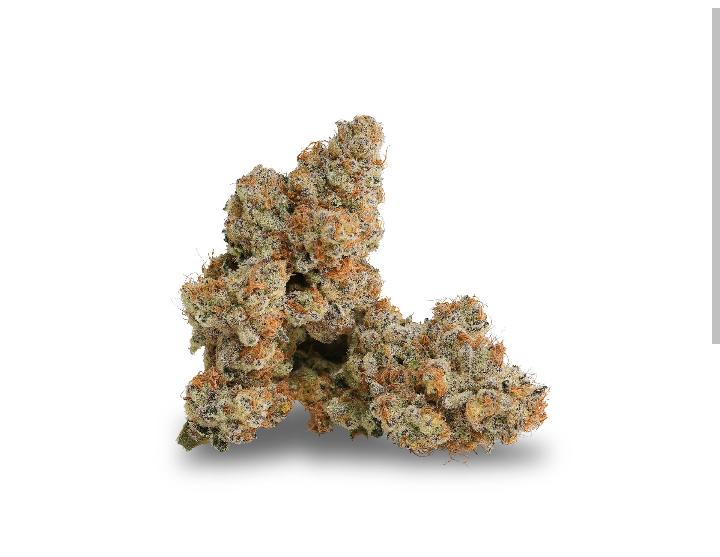
Peach Slushie Flower: Understanding Weights and Local Cannabis Searches
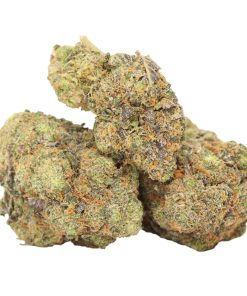
Peach Slushie Flower is a cannabis product name readers may encounter while researching flower descriptions. Understanding that name requires separating descriptive wording from verified facts about weight, composition, and legal status.
A product name does not establish an exact THC percentage, a particular flavor, or availability in a specific location. Similarly, searches such as “weed near me” and “marijuana near me” express an interest in local information; they do not verify the claims appearing in search results.
This educational guide provides a weed ounce chart, explains common local-search phrases, and discusses how to assess product information. It helps readers distinguish mathematical conversions, commercial descriptions, and official regulatory guidance.
What Does Peach Slushie Flower Mean?
Peach Slushie Flower identifies how cannabis flowering material is named or described. The name alone does not prove a particular genetic background, terpene profile, or laboratory result.
Although “Peach Slushie” may suggest a flavor association, readers should not assume that every batch has a verified peach aroma or contains added flavoring. Those are separate claims requiring evidence.
A clear description should identify what is documented, including:
- The product format.
- The stated net weight.
- The relevant batch identifier.
- Supporting laboratory information.
- The basis for any specific composition claim.
For further educational exploration, review cannabis terminology on Bulkweedusa.com. Evaluate descriptions against their evidence rather than treating a familiar name as a guarantee.
Why Product Names and Measurements Are Different
A name helps identify a product. A gram or ounce figure describes its mass. A cannabinoid percentage describes concentration.
These details should not be combined into a single assumption about quality or effects. Two packages with matching weights can have different compositions, while two batches with the same name can carry different documented results.
For Peach Slushie Flower, the strongest description is one that keeps those distinctions clear.
Weed Ounce Chart: Common Flower Measurements
A weed ounce chart translates ounce-based quantities into grams. The ordinary ounce used here is the avoirdupois ounce.
One standard ounce equals 28.349523125 grams. Informal cannabis descriptions commonly round that quantity to 28 grams. NIST publishes the standard conversion factors. NIST
| Quantity | Common rounded description | Standard equivalent |
|---|---|---|
| One gram | 1 g | Approximately 0.0353 ounces |
| Eighth ounce | 3.5 g | Approximately 3.5437 g |
| Quarter ounce | 7 g | Approximately 7.0874 g |
| Half ounce | 14 g | Approximately 14.1748 g |
| One ounce | 28 g | Approximately 28.3495 g |
| Two ounces | 56 g | Approximately 56.6990 g |
| Three ounces | 84 g | Approximately 85.0486 g |
| Four ounces | 112 g | Approximately 113.3981 g |
For the underlying reference, consult NIST’s unit conversion tables.
The chart explains measurements. It does not establish recommended consumption amounts or legal possession limits.
Is a 28-Gram Package Exactly One Ounce?
No. Twenty-eight grams is slightly less than one standard ounce.
The rounded convention is common, but an explicit “28 g” statement remains a specific weight claim. An educational page should explain its rounding rather than switching between 28 grams and 28.35 grams without clarification.
Also distinguish net weight from packaging weight. Net weight concerns the contents, while gross weight includes the container and other packaging.
Weed Near Me: Understanding What the Search Expresses
The phrase weed near me asks a search engine to interpret a topic in relation to a location. Results may include maps, directories, advertisements, commercial pages, or educational resources.
Those formats provide different kinds of information. A directory entry might summarize another source, while an advertisement presents a commercial message.
Neither format independently verifies the composition of Peach Slushie Flower. A local result also does not establish that the named product is currently present at that location.
When evaluating a result, identify who published it, when it was updated, and exactly what claim it makes. This prevents a broad listing from being treated as proof of a specific product fact.
“Weed Dispensary Near Me Now Open”: What “Open” Does Not Establish
Weed dispensary near me now open combines location and business-hours information. However, an “open” status does not establish regulatory authorization, product testing, or current inventory.
Hours displayed by a third party may also be incomplete or outdated. A time-related listing and a licensing statement answer different questions.
California’s Department of Cannabis Control explains that cannabis retailers require a state license and warns that some legitimate-looking stores are unlicensed. It also notes that local governments can impose stricter rules than the state. These are California-specific requirements. Department of Cannabis Control
Read California’s official cannabis legal overview for an example of regulatory guidance. Do not assume its rules automatically apply elsewhere.
Pot Shop Near Me and Weed Shop Near Me
Pot shop near me and weed shop near me are informal search expressions. The terms “pot shop” and “weed shop” do not independently identify a standardized legal category.
A page using those expressions should explain what kind of entity it describes rather than relying on casual wording.
Important distinctions include whether the information concerns a regulated cannabis business, a hemp-related business, or an educational organization. A shared topic does not make those entities equivalent.
For Peach Slushie Flower, a local business phrase also cannot establish batch composition or verified characteristics. Those questions require product-specific information.
THC Near Me: A Broad and Ambiguous Phrase
THC near me combines a cannabinoid term with a location request. It does not identify one specific product format.
A THC reference may appear in discussions of flower, concentrates, edibles, or other products. These formats should not be treated as interchangeable.
A useful description should clarify:
- Which product format is being discussed.
- Whether a number measures total material or cannabinoid content.
- Whether information concerns a particular batch.
- Which jurisdiction the legal explanation addresses.
A flower weight in grams and an edible THC amount in milligrams answer different questions. Matching numbers do not establish equivalent composition or effects.
For additional terminology exploration, review Bulkweedusa.com while separating product descriptions from independent health and regulatory evidence.
Dispensary Cerca de Mi: Spanish Local-Search Terminology
Dispensary cerca de mi combines the English word “dispensary” with Spanish wording meaning “near me.” The phrase expresses local-search interest rather than verified licensing status.
Spanish-speaking readers need the same clear distinctions as English-speaking readers: product identity, measurement units, supporting documentation, and applicable rules.
A bilingual page should preserve those distinctions when translating information. For example, grams of flower should not become confused with milligrams of THC.
Language accessibility improves understanding, but it does not change what evidence is needed to support a claim.
Marijuana Near Me: Location Is Only One Part of the Question
A search for marijuana near me does not establish that a person, product, or activity meets applicable requirements.
Location information and legal authorization should be assessed separately. A city name in a page title does not demonstrate compliance with that city’s rules.
Likewise, a Peach Slushie Flower listing does not prove that possession, sale, or transport is permitted in every jurisdiction. Legal conclusions need current official guidance addressing the relevant circumstances.
An educational article should state its scope clearly instead of suggesting that a location-based phrase answers every regulatory question.
Educational Resources: Separating Weight, Health, and Legal Claims
Different questions require different evidence:
| Question | Relevant information |
|---|---|
| How many grams are in an ounce? | A standard measurement reference |
| What does a batch contain? | Matching laboratory documentation |
| Which rules apply? | Current official regulatory guidance |
| Does a claim concern health effects? | Appropriate public-health or clinical evidence |
| Is a local listing current? | Its source, date, and stated scope |
For health information, consult the CDC’s cannabis health effects resources. Product names and weight charts cannot establish safety or support medical promises. CDC
This approach helps readers assess Peach Slushie Flower information without asking one source to prove something outside its purpose.
Frequently Asked Questions
1. What is Peach Slushie Flower?
Peach Slushie Flower is a cannabis flower product name. Its specific composition and characteristics require supporting batch information.
2. How many grams are in one ounce?
One standard ounce equals approximately 28.35 grams. A 28-gram description uses a common rounded convention.
3. Does “weed dispensary near me now open” prove a business is authorized?
No. Business-hours information does not independently establish licensing status, product testing, or legal compliance.
4. What does “dispensary cerca de mi” mean?
It combines “dispensary” with Spanish wording meaning “near me.” It describes a location-based search interest.
5. Does “THC near me” identify one particular product?
No. THC can be mentioned in descriptions of multiple formats. The product type, units, and supporting evidence need clarification.
Where to Explore Further
Continue exploring cannabis terminology through Bulkweedusa.com, while using measurement references, official regulators, and public-health agencies to verify important claims. For Peach Slushie Flower, distinguish the descriptive name, stated quantity, documented composition, and local-search wording.
| Quantity | 28G, QP, HP, 1 lb |
|---|
Be the first to review “Peach Slushie Flower”
Related products
Sativa Cannabis Strain
Hybrid cannabis strains
Sativa Cannabis Strain
Hybrid cannabis strains
Sativa Cannabis Strain

Hybrid cannabis strains

Sativa Cannabis Strain
Sativa Cannabis Strain
Reviews
There are no reviews yet.