
Cannabis Strain
Cannabinoid Hyperemesis Syndrome and Marijuana Withdrawal
Mar
Cannabinoid Hyperemesis Syndrome and Marijuana Withdrawal
If you are researching cannabinoid hyperemesis syndrome and marijuana withdrawal, you are likely looking for clear, medically grounded information about symptoms, causes, and what happens when cannabis use stops. This topic is important for both regular and heavy cannabis users.
Cannabis products come from Cannabis sativa and contain compounds such as Tetrahydrocannabinol (THC), which interact with the body’s endocannabinoid system.
For a clinical overview of cannabinoid hyperemesis syndrome, see:
https://en.wikipedia.org/wiki/Cannabinoid_hyperemesis_syndrome
Weedmaps also explains cannabis-related health effects here:
https://weedmaps.com/learn/cannabis-and-your-body/cannabinoid-hyperemesis-syndrome
Leafly provides a helpful guide on cannabis withdrawal and tolerance:
https://www.leafly.com/news/health/cannabis-withdrawal
What Is Cannabinoid Hyperemesis Syndrome?
Understanding Cannabinoid Hyperemesis Syndrome
Cannabinoid Hyperemesis Syndrome (CHS) is a condition linked to long-term, heavy cannabis use. It is characterized by recurring nausea, vomiting, and abdominal discomfort.
CHS is relatively rare but increasingly recognized in medical settings.
Symptoms of CHS
Common symptoms include
• severe nausea
• repeated vomiting
• abdominal pain
• dehydration
• relief from hot showers or baths
The temporary relief from hot water is a unique and commonly reported feature of CHS.
What Causes CHS?
The exact cause of CHS is still being studied. Researchers believe it may be related to how cannabinoids like THC affect the digestive system and brain over time.
Long-term exposure to THC may disrupt the body’s normal regulation of nausea and vomiting.
Marijuana Withdrawal
What Is Marijuana Withdrawal?
Marijuana withdrawal occurs when a person who regularly uses cannabis stops or significantly reduces use.
The body adapts to regular THC exposure, and when use stops, withdrawal symptoms may appear.
Symptoms of Marijuana Withdrawal
Common symptoms include
• irritability
• anxiety
• sleep difficulties
• reduced appetite
• mood changes
• headaches
Symptoms are usually mild to moderate but can vary depending on usage patterns.
Timeline of Withdrawal
Withdrawal symptoms typically follow this pattern
• begin within 24–72 hours after stopping
• peak within the first week
• gradually improve over 1–2 weeks
Heavy users may experience longer-lasting symptoms.
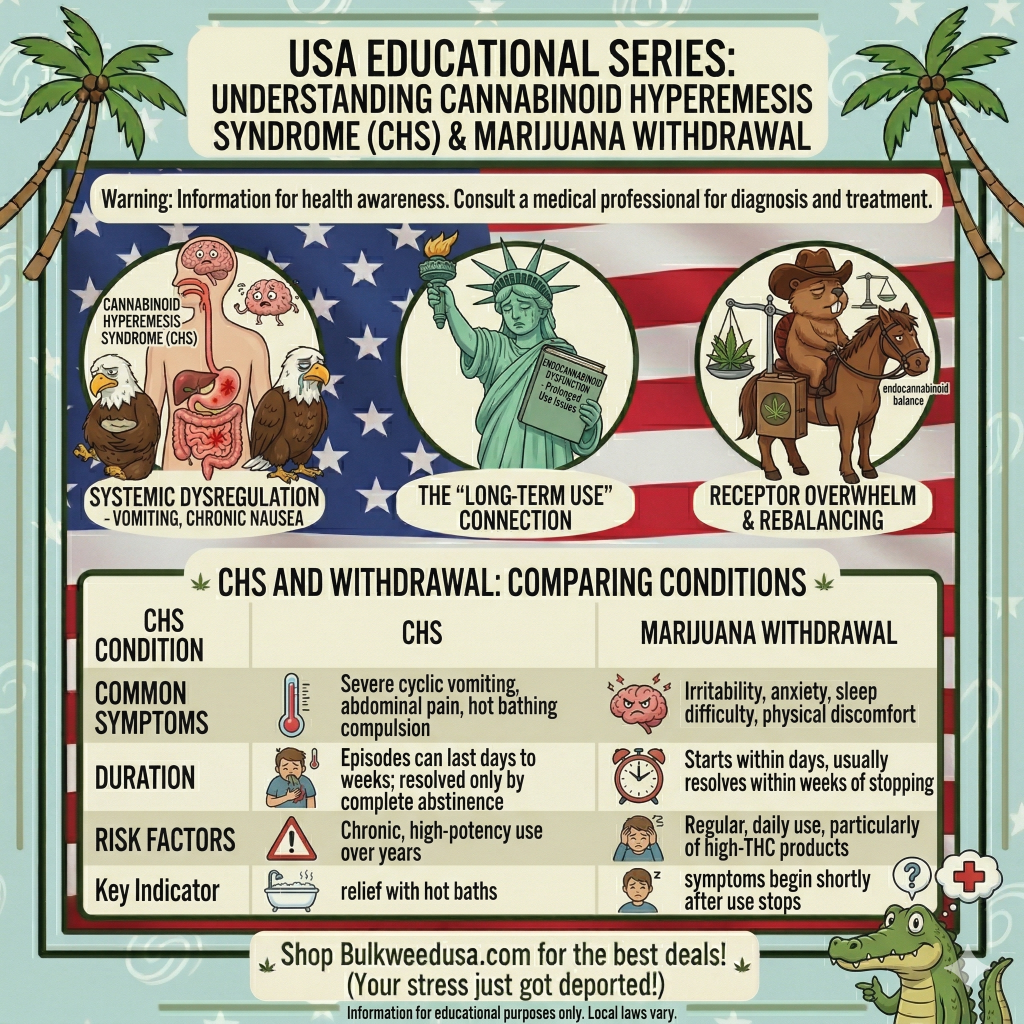
CHS vs Marijuana Withdrawal
Although both are related to cannabis use, CHS and withdrawal are very different conditions.
CHS
• linked to ongoing heavy cannabis use
• causes severe vomiting and nausea
• symptoms improve when cannabis use stops
Withdrawal
• occurs after stopping cannabis
• involves mood and sleep changes
• usually less physically intense
Understanding the difference is important for proper management.
Who Is at Risk?
People more likely to experience CHS or withdrawal include
• long-term cannabis users
• high-THC product users
• daily or frequent consumers
• individuals with high tolerance
Not everyone who uses cannabis will experience these conditions.
Management and Treatment
CHS Treatment
The most effective way to stop CHS symptoms is
• discontinuing cannabis use
• hydration and medical care if needed
In severe cases, hospitalization may be required.
Withdrawal Management
Managing marijuana withdrawal may include
• gradual reduction of cannabis use
• proper sleep and nutrition
• stress management techniques
• medical support if necessary
Most withdrawal symptoms resolve on their own over time.
Responsible Cannabis Use
Understanding risks like CHS and withdrawal is part of responsible cannabis use.
Consumers should
• monitor frequency of use
• avoid excessive THC consumption
• take tolerance breaks when needed
• seek medical advice if symptoms occur
If you are exploring cannabis products, strains, or formats, you can review options at bulkweedusa.com to compare potency levels and product types. Always use cannabis responsibly and within legal guidelines.
Important Disclaimer
Cannabis-related conditions such as CHS and withdrawal should be evaluated by a healthcare professional. This content is for educational purposes only and not a substitute for medical advice.
Final Thoughts
Cannabinoid hyperemesis syndrome and marijuana withdrawal are important topics for anyone using cannabis regularly. While cannabis is widely used, it can affect individuals differently depending on dosage, frequency, and tolerance.
Recognizing symptoms early and making informed decisions about cannabis use can help reduce potential risks.
