
Cannabis Education
Medical Cannabis for Anxiety
Aug
Medical Cannabis for Anxiety: THC, CBD, Inflammation and Tennessee Weed Laws
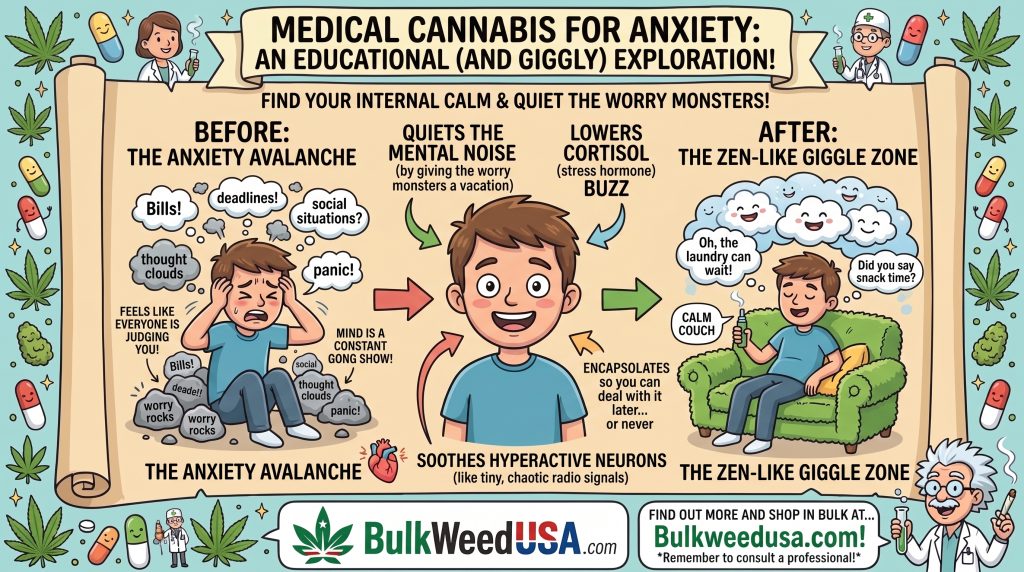
Medical cannabis for anxiety is receiving increasing attention as cannabis laws change across the United States and researchers investigate how cannabinoids may affect stress, anxiety, mood, and related symptoms. However, cannabis does not affect everyone in the same way. Some people report relaxation, while others experience an anxious high, paranoia, increased heart rate, or worsening anxiety.
THC and CBD are also different compounds. THC is intoxicating and can sometimes increase anxiety, particularly at higher doses, whereas CBD has attracted research interest for possible anxiety-related effects.
Questions about medical cannabis for anxiety also overlap with searches about THC and inflammation, cannabis anti inflammatory effects, anti inflammatory weed, does marijuana help with inflammation, does weed reduce inflammation, and changing state laws such as Tennessee weed laws.
This guide examines those questions using current scientific and government information while separating promising research from claims that have not been established.
What Is Medical Cannabis for Anxiety?
Medical cannabis generally describes cannabis or cannabinoid products used for health-related purposes under applicable state laws.
Cannabis contains numerous cannabinoids, but two receive most of the attention:
THC (delta-9-tetrahydrocannabinol) produces the characteristic cannabis high. It can influence mood, memory, perception, coordination, and judgment.
CBD (cannabidiol) does not cause the characteristic THC intoxication. Researchers continue to investigate its effects on anxiety and other conditions.
This distinction matters because saying that “cannabis helps anxiety” is too broad.
A high-THC product and a CBD-dominant preparation can have substantially different effects.
For additional background on cannabis terminology, readers can explore Bulkweedusa.com while using scientific and government resources for medical and legal decisions.
Does Medical Cannabis for Anxiety Actually Work?
Research into medical cannabis for anxiety has produced promising findings alongside substantial uncertainty.
A recent systematic review examining medicinal cannabis for anxiety disorders found evidence of possible improvement in some studies involving conditions such as generalized anxiety disorder, social anxiety, and PTSD. However, researchers also found negative or inconclusive findings and emphasized limitations in the existing evidence.
Readers can review relevant peer-reviewed research through PubMed’s cannabis and anxiety research database.
This means cannabis should not be described as a proven universal anxiety treatment.
The effects can depend on the cannabinoid, THC concentration, dose, formulation, frequency of use, and individual characteristics.
Medical Cannabis for Anxiety: THC vs. CBD
THC and CBD deserve separate consideration.
THC and Anxiety
THC can produce relaxation for some people, but it can also increase anxiety.
Possible unwanted THC effects include:
- Nervousness
- Racing thoughts
- Panic
- Paranoia
- Increased heart rate
- Altered perception
- Difficulty concentrating
- Disorientation
The CDC’s cannabis and mental health guidance notes that cannabis can sometimes cause anxiety, paranoia, and disorientation.
That makes THC concentration particularly important when discussing medical cannabis for anxiety.
More THC does not necessarily mean greater therapeutic benefit.
CBD and Anxiety
CBD has attracted substantial scientific attention as a possible anxiety-related cannabinoid.
Researchers have investigated CBD in areas including social anxiety, generalized anxiety, fear responses, and stress.
However, results vary among studies, and commercially available CBD products should not automatically be assumed to reproduce results obtained with controlled research preparations.
Claims that CBD universally “cures anxiety” therefore go beyond the available evidence.
What Is Anxious Weed?
Anxious weed is an informal phrase sometimes used to describe cannabis associated with nervousness or uncomfortable psychological effects.
It is not a recognized medical category or scientific classification.
A person’s response can depend on:
- THC concentration
- CBD concentration
- Amount consumed
- Previous cannabis exposure
- Individual sensitivity
- Existing anxiety
- Other substances
- Product formulation
This explains why two people can have very different experiences with cannabis.
Rather than labeling a particular variety as universally relaxing or anxiety-producing, consumers should recognize the importance of cannabinoid composition and individual response.
What Is an Anxious High?
An anxious high describes anxiety developing during cannabis intoxication.
Someone experiencing it might notice racing thoughts, fear, panic, paranoia, restlessness, or excessive awareness of physical sensations such as heartbeat.
THC is particularly relevant.
Higher THC exposure can produce stronger intoxication and may increase the likelihood or severity of undesirable psychological effects for some people.
This creates an important contradiction in cannabis marketing: a product promoted for relaxation can potentially increase anxiety in susceptible individuals.
Severe symptoms, loss of consciousness, dangerous behavior, significant chest pain, or other apparent medical emergencies require appropriate medical attention.
Medical Cannabis for Anxiety and High-THC Products
Modern cannabis products can contain considerably different THC concentrations.
Traditional flower, concentrates, edibles, vape products, and tinctures should not be assumed to deliver equivalent THC exposure.
High-potency THC products deserve additional caution when anxiety is the primary concern.
THC can affect judgment, coordination, reaction time, memory, and perception in addition to its potential psychological effects.
People should not drive while impaired by cannabis.
Readers exploring broader cannabis education can use Bulkweedusa.com as a starting point while verifying medical information through appropriate healthcare and scientific sources.
Medical Cannabis for Anxiety Is Not a Replacement for Established Care
Persistent anxiety can involve several different conditions, including:
- Generalized anxiety disorder
- Panic disorder
- Social anxiety disorder
- Specific phobias
- PTSD-related anxiety
These conditions are not identical.
Established treatments can include psychotherapy, cognitive behavioral therapy, other psychological interventions, medication, or combinations of approaches.
Someone experiencing significant or persistent anxiety should not discontinue prescribed treatment simply because cannabis appears to provide temporary relief.
Cannabis and cannabinoids can also interact with medications, making healthcare-professional involvement particularly important.
THC and Inflammation
THC and inflammation represent a separate area of cannabis research.
Cannabinoids interact with the body’s endocannabinoid system and can influence immune and inflammatory signaling.
Laboratory and animal research has demonstrated anti-inflammatory or immunomodulatory effects involving cannabinoids.
However, biological activity is not the same as demonstrated treatment effectiveness.
A substance affecting inflammatory signaling in a laboratory does not automatically mean it successfully treats inflammatory disease in humans.
Is Cannabis Anti-Inflammatory?
The phrase cannabis anti inflammatory reflects genuine scientific interest, but it can easily be oversimplified.
Researchers have examined cannabinoids in connection with inflammatory pathways involving:
- Immune cells
- Cytokines
- Pain signaling
- Neurological inflammation
- Gastrointestinal inflammation
- Other immune responses
The results do not establish cannabis as a universal anti-inflammatory medicine.
Inflammation is involved in many different diseases, and those diseases do not necessarily respond to the same treatments.
Does Marijuana Help With Inflammation?
The question does marijuana help with inflammation requires separating symptom relief from disease modification.
Suppose someone with an inflammatory condition experiences less pain after using cannabis.
That may represent a change in perceived pain.
It does not necessarily demonstrate that the underlying inflammation decreased.
This distinction can be particularly important for conditions such as rheumatoid arthritis and inflammatory bowel disease, where uncontrolled inflammation can continue damaging tissue.
Cannabis should not replace prescribed anti-inflammatory or disease-modifying treatment without appropriate medical guidance.
Does Weed Reduce Inflammation?
Research suggests certain cannabinoids can influence inflammatory mechanisms.
Whether weed reduces inflammation in a clinically meaningful way depends on several variables:
- Cannabinoid composition
- THC and CBD concentrations
- Formulation
- Dose
- Route of administration
- Specific disease
- Duration of treatment
- Outcome being measured
Human clinical trials are particularly important.
Results obtained from cells or laboratory animals can help researchers understand biological mechanisms, but they cannot independently establish clinical effectiveness in humans.
Is Anti-Inflammatory Weed a Real Medical Category?
Anti inflammatory weed is primarily an informal or marketing phrase rather than a standardized medical classification.
Cannabis plants can contain different concentrations of THC, CBD, minor cannabinoids, terpenes, and other compounds.
That chemical variation makes broad medical claims about particular “weed” unreliable without appropriate evidence.
Smoking also introduces another consideration.
The CDC’s cannabis health-effects information explains important health considerations associated with cannabis use, including risks connected with smoked cannabis.
Cannabinoids demonstrating anti-inflammatory activity does not make cannabis smoke harmless.
Anxiety, Inflammation and Cannabis Are Different Research Questions
Anxiety and inflammation sometimes appear together in cannabis searches, but they should not be merged into a single medical claim.
Research showing that a cannabinoid influences an inflammatory pathway does not demonstrate that it treats anxiety.
Similarly, research involving CBD and anxiety does not establish that CBD effectively treats an inflammatory disease.
Good cannabis education separates:
Mechanism: What does the cannabinoid do biologically?
Symptoms: Does a person report feeling different?
Clinical outcomes: Does a measurable medical condition improve?
Safety: What adverse effects occur?
Long-term outcomes: Do benefits persist?
These distinctions help prevent preliminary research from becoming exaggerated health claims.
Is Weed Legal in Tennessee?
Is weed legal in Tennessee? This question requires distinguishing marijuana from qualifying hemp-derived cannabinoid products.
As of 2026, Tennessee has not legalized a general adult-use marijuana market comparable to states such as California or Colorado.
Tennessee instead maintains a regulated framework for qualifying hemp-derived cannabinoid products.
That means the presence of certain THC-containing hemp products should not be interpreted as general recreational marijuana legalization.
Is Marijuana Legal in Tennessee?
For people searching is marijuana legal in Tennessee or is marijuanas legalized in TN, conventional adult-use marijuana remains illegal under Tennessee state law.
Tennessee’s regulated hemp-derived cannabinoid market is legally distinct.
This distinction matters because the terms marijuana, hemp, THC, CBD, and cannabis are sometimes used interchangeably in everyday conversation even though laws can treat them differently.
Consumers should use current Tennessee government resources when determining the status of a specific cannabinoid product.
Tennessee Weed Laws in 2026
Tennessee weed laws changed significantly with the state’s newer hemp-derived cannabinoid regulatory framework.
The Tennessee Alcoholic Beverage Commission now plays a major role in regulating hemp-derived cannabinoid products.
Current state guidance distinguishes qualifying hemp-derived products from marijuana and regulates areas such as:
- Licensing
- Retail sales
- Product requirements
- THC concentration
- Business compliance
- Age restrictions
Because Tennessee’s rules have recently changed, older cannabis articles may contain outdated information.
For current requirements, consult the Tennessee Alcoholic Beverage Commission’s official hemp-derived cannabinoid guidance.
Is THC Legal in Tennessee?
The question is THC legal in Tennessee cannot accurately be answered with a simple yes or no.
The answer depends on the source, product classification, THC concentration, and compliance with Tennessee’s current hemp-derived cannabinoid laws.
Current Tennessee guidance distinguishes qualifying hemp-derived cannabinoid products from products exceeding applicable legal THC limits.
Therefore:
Some qualifying hemp-derived THC products can be lawful under Tennessee’s regulated system.
That does not mean conventional recreational marijuana is legal.
Consumers should verify current rules before relying on product labels or retailer claims.
Are Edibles Legal in TN?
The question are edibles legal in TN requires the same distinction.
Certain qualifying hemp-derived cannabinoid edibles can fall within Tennessee’s regulated legal framework when they comply with applicable requirements.
That is not equivalent to Tennessee legalizing conventional recreational marijuana edibles.
Whether a specific product is lawful can depend on factors including its cannabinoid source, THC concentration, labeling, product requirements, and the licensing status of businesses involved.
This is why current state guidance is preferable to generalized statements such as “THC edibles are legal in Tennessee.”
Cannabis Laws Can Change Quickly
Cannabis law is particularly dynamic in the United States.
Federal law, state marijuana laws, hemp legislation, administrative regulations, and local rules can interact.
Consumers should therefore pay attention to the publication date when researching cannabis legality.
A Tennessee article written several years ago may no longer accurately describe the state’s current hemp-derived cannabinoid framework.
The same principle applies to other states.
Medical Cannabis for Anxiety and Responsible Decision-Making
People considering cannabis because of anxiety should consider more than whether a particular product is available.
Useful questions include:
What cannabinoid does the product contain?
How much THC does it contain?
What evidence supports its proposed use?
Could THC worsen my anxiety?
Could it interact with medication?
Is the product legal where I live?
Could cannabis interfere with driving, work, or other responsibilities?
These questions provide more useful information than relying on strain names or promotional claims.
For broader educational exploration of cannabis terminology, readers can also visit Bulkweedusa.com while relying on scientific and government sources for clinical and legal decisions.
Frequently Asked Questions
1. Does medical cannabis for anxiety work?
Some cannabinoid research suggests possible benefits for certain anxiety symptoms, particularly involving CBD, but evidence remains mixed. Cannabis is not a proven universal treatment for anxiety disorders.
2. Can THC make anxiety worse?
Yes. THC can cause or intensify anxiety, panic, paranoia, and uncomfortable thoughts in some people.
3. What causes an anxious high?
An anxious high can be influenced by THC concentration, amount consumed, individual sensitivity, existing anxiety, environment, previous cannabis experience, and other substances.
4. Is CBD better than THC for anxiety?
CBD has produced promising findings in some anxiety research without causing the characteristic THC high. However, evidence remains incomplete, and CBD should not be described as a universal anxiety treatment.
5. Is cannabis anti-inflammatory?
Cannabinoids can influence inflammatory pathways, but this does not establish cannabis as a clinically proven treatment for every inflammatory disease.
6. Does marijuana help with inflammation?
Cannabis may affect pain or inflammatory signaling in certain circumstances, but symptom improvement does not necessarily mean underlying disease inflammation has decreased.
7. Does weed reduce inflammation?
Some cannabinoids demonstrate anti-inflammatory activity in experimental research. Clinical effectiveness depends on the disease, cannabinoid, formulation, dose, and other variables.
8. Is weed legal in Tennessee?
Tennessee has not established general adult-use marijuana legalization. The state separately regulates qualifying hemp-derived cannabinoid products.
9. Is THC legal in Tennessee?
Some qualifying hemp-derived THC products can be lawful when they comply with Tennessee’s current requirements. This does not make conventional recreational marijuana legal.
10. Are edibles legal in Tennessee?
Certain qualifying hemp-derived cannabinoid edibles can be legal when they meet Tennessee’s regulatory requirements. Conventional recreational marijuana edibles remain a separate legal category.
Educational Resources
For mental-health information, readers can review the CDC’s Cannabis and Mental Health guidance.
For peer-reviewed studies concerning medical cannabis for anxiety, use PubMed’s cannabis and anxiety research database.
For current state-specific rules, consult the Tennessee Alcoholic Beverage Commission’s hemp-derived cannabinoid guidance.
Final Thoughts on Medical Cannabis for Anxiety
Medical cannabis for anxiety is an evolving field rather than a settled medical treatment.
CBD and other cannabinoids continue to attract research interest, but THC can produce very different outcomes. For some individuals, THC may feel relaxing; for others, it can trigger an anxious high, panic, paranoia, or increased nervousness.
The same evidence-based approach should be applied to claims about THC and inflammation, cannabis anti inflammatory effects, anti inflammatory weed, whether marijuana helps with inflammation, and whether weed reduces inflammation. Biological mechanisms and preliminary studies should not be confused with proven treatment of inflammatory disease.
Tennessee law requires similar precision. Conventional adult-use marijuana has not been broadly legalized, while qualifying hemp-derived cannabinoid products operate under a separate regulatory framework.
Scientific evidence, individual medical circumstances, and state law should therefore be evaluated separately when researching cannabis.
